


As the middle of November was quickly approaching, I decided that I wanted to read nonfiction books for the rest of the month. It was “Nonfiction November” after all, and I’d been reading more fiction than usual.
I typically read slightly more nonfiction than fiction, except in 2019 when my reading was perfectly split. I mean, just look at this beautifully even chart!
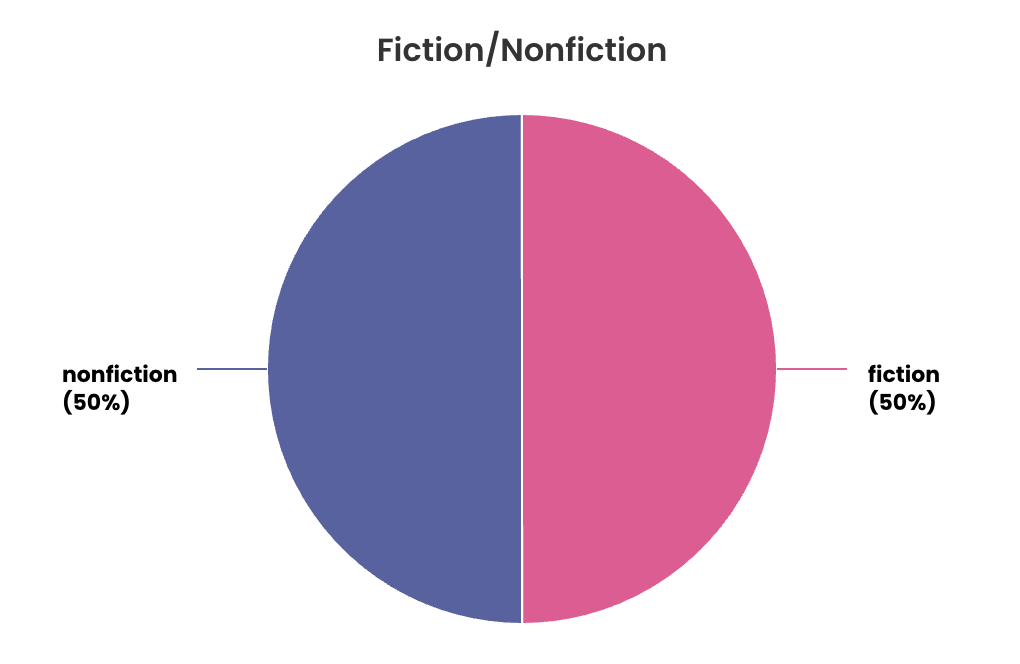
So satisfying.
Anyway, here are the books I was able to get through once I locked in on Nonfiction November (in the order that I read them in) and my thoughts on each one:
1. AI Futures by Evgeny Morozov

It’s probably no secret that I’m not the biggest fan of AI, but I’m reasonable and realistic enough to acknowledge that we’re going to have to find a way to coexist with it without allowing it to destroy the planet or erode human creativity and intellect.
Evgeny Morozov’s book, AI Futures, challenges the false choice between accepting Silicon Valley’s vision of AI and rejecting it entirely. Morozov argues for a third way that’s rooted in a more humane technological tradition that existed before corporate dominance.
In his argument, he asserts that building political power is what’s needed to reclaim control of AI from Big Tech and create a future that serves everyone. The book includes contributions from writers who respond to his argument from different angles, including exploring the application of AI in the military, the political theory of algorithms, and copyright issues.
I picked this book up during Haymarket Books’ eBook sale (and it’s still on sale). I wanted to read a book on AI written by people who have thought deeply on the topic and still hold a healthy level of skepticism. This book was that, but wasn’t as straightforward on solutions as I hoped it would be.
I appreciated how many “AI and” intersections the book covered, but this strength also became a weakness in some pieces that I felt were too in the weeds on a topic and didn’t cover the AI connection sharply enough. I still learned a lot, though, and the essay about copyright after ChatGPT was the most memorable for me.
2. Awake: A Memoir by Jen Hatmaker

Reading Jen Hatmaker’s new memoir, Awake, felt like a full-circle moment of sorts. I remember when she and her now ex-husband were everywhere on the Christian media circuit, and a few years after she first rose to fame, she was someone I would have refused to read and written off as a heretic.
But when I read her memoir last month, I saw myself in the parts of her story where she talked about outgrowing the faith spaces you once knew and the scandal of changing your mind.
The memoir’s primary focus, however, was the dissolution of her 26-year marriage. The opening scene is her waking up at 2:30 AM and hearing her husband whisper-talking to another woman while lying beside her in their bed (this is not a spoiler—it’s in the official book synopsis). That moment blew up her life and the lives of their five kids. This memoir is a candid picture of her life immediately after that moment, during other landmark life events, during the divorce process, and in the first few years after the divorce.
Some of the most profoundly affecting parts for me were about how the media handled her expression of support for LGBTQ couples in 2016 and breaking the news about her 2020 divorce before her family was ready to share it. I remember both of these moments and never knew how much turmoil her family went through behind the scenes.
It was also gut-wrenching to read about all it takes to untangle a life that has been two people’s lives intertwined for almost thirty years. But as challenging as it was to read at times, I loved this book and the way she told her story through honest, beautifully written, and often funny vignettes. It’s a brilliant way to do a memoir, using her story as a tribute to mental health treatment, the power of community, exiting harmful religious systems, and healing after unexpected crises.
Awake is the only book on this list that I rated five stars, and you’ll see it again in my top books of the year post.
3. Invisible ADHD: Proven Mood and Life Management for Smart Yet Scattered Women by Shanna Pearson

I could probably write my own book about how women’s challenges with ADHD are so often missed and misdiagnosed (it would be a memoir). But if you want an ADHD coach’s insights, Invisible ADHD is a great breakdown that helps readers understand why their ADHD symptoms occur and how to make life easier.
It seems like every day—with every podcast I listen to or book I read about ADHD—I discover that some of my thought patterns and behaviors may be tied to ADHD. Invisible ADHD continued that trend, with eye-opening revelations about ADHD’s impact on hormones, mood, and the feelings of severe overwhelm that I know so intimately.
It could be a little corny and self-promotional, but Invisible ADHD is full of helpful strategies for communicating effectively, managing moods, optimizing memory, following through, and more. I got a lot out of reading it. It’s definitely geared toward women, but many of the tips would apply to anyone with ADHD.
4. That’s How They Get You: An Unruly Anthology of Black American Humor by Damon Young

At this point in the month, I was beginning to tire of nonfiction, so I decided to try some humor essays. I haven’t read much humor (outside of R. Eric Thomas’ two essay collections, which I loved), so I was excited for this one.
“Unruly” was a good way to describe this collection. It’s unapologetically Black and all over the place. I never knew what I’d get from one page to the next, and that was fun. The humor in That’s How They Get You is so magnificently Black culture-specific that it almost makes me uncomfortable that it’s available for public consumption, but I suppose that’s the beauty of it. In this compilation of essays, short stories, letters, and rants, a talented group of writers makes light of their good and bad experiences in the best way.
I didn’t love this anthology as much as I expected to, but I definitely enjoyed it. I’ve been reading Damon Young’s work since he was writing the Very Smart Brothas blog in 2008, and I’m ashamed that his book, What Doesn’t Kill You Makes You Blacker, has been collecting dust on my shelf for years. I’m positive that I would like that book more than That’s How They Get You, so I’ll let you know what I think when I finally read it.
*This review is based on an advance copy provided by the publisher.
5. Felon: Poems by Reginald Dwayne Betts
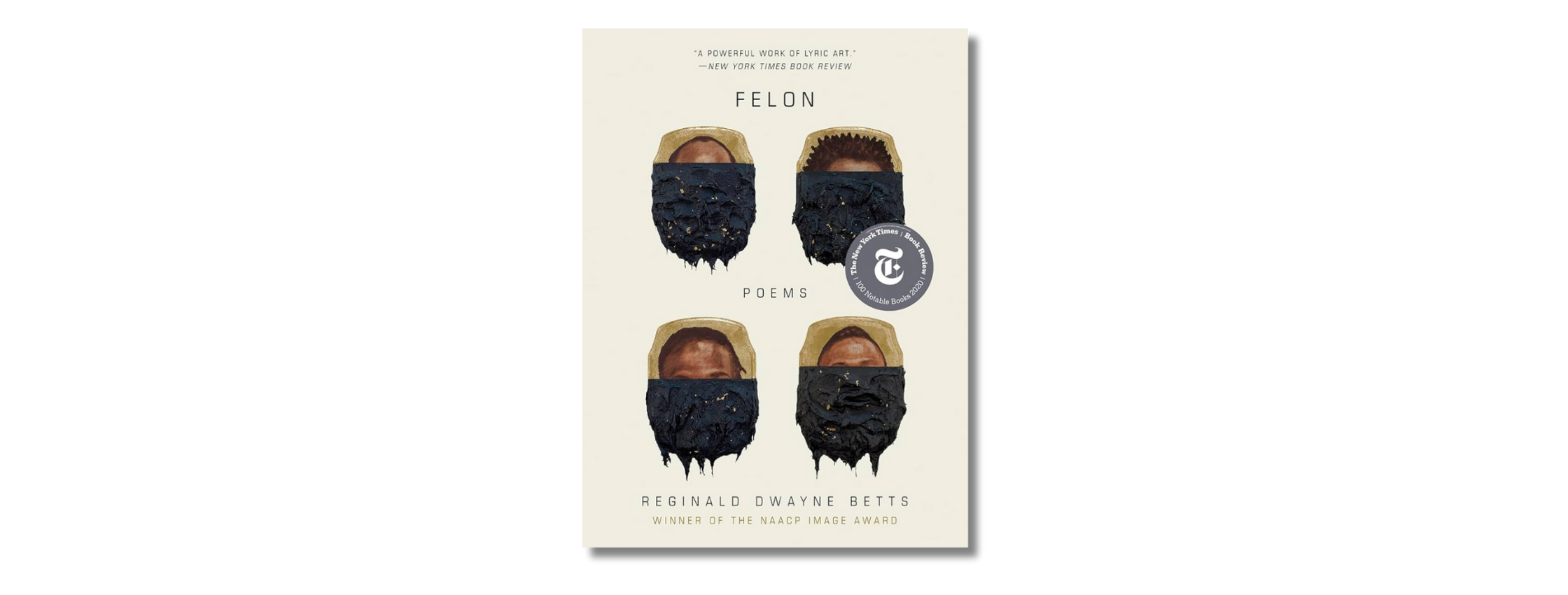
On a random day many years ago, I randomly thought, “I want to read some poetry by Black men.” That impulse led me to pick up Felon that day (along with The Tradition by Jericho Brown), and I finally read it last month to end Nonfiction November.
Betts showed himself to be a master poet with this collection. Felon is an inventive and impressive body of work that surprised me with its range across both subject and format.
The poems in Felon share a confronting truth about the prison system. Betts uses these poems to tell the story of a life shaped by incarceration, especially how it can bleed into every part of a person’s identity and existence. Through poems that capture his experiences with homelessness, relationships, love, grace, and fatherhood, he exposes the afterlife of prison and all the ways it can follow you home.
My favorite thing about this collection was the skillful way it moves between traditional forms and others, including redacted/blackout poems created from court documents. These poems were incredibly moving, bold, and creative.

That’s it! If you read anything good during Nonfiction November or just have a nonfiction book recommendation for me, let me know in the comments.